Quick Answer: You can often remove tree roots in drains without digging by using mechanical root cutting or high-pressure water jetting to clear the growth from inside the pipe. A CCTV drain survey can first identify where the roots entered and whether the pipe is still structurally sound. After removal, drain relining can seal cracks or defective joints to help prevent roots from growing back. Excavation is generally only necessary when the drain has collapsed, become severely displaced, or is damaged beyond a no-dig repair.
Tree roots in a drain can cause recurring blockages, slow drainage, gurgling sounds, and unpleasant smells, but they do not automatically mean the pipe needs to be dug up and replaced. In many cases, you can remove tree roots from drains using no-dig methods that work from inside the existing pipe, helping restore flow without major disruption to your garden, driveway, or flooring.
The right solution depends on how far the roots have spread and whether they have simply entered through a crack or joint or caused more serious structural damage. Mechanical root cutting, high-pressure water jetting, and drain relining can often resolve the problem without excavation, while digging is generally reserved for pipes that have collapsed, shifted, or failed beyond repair.
In this guide, you will learn how tree roots get into underground drains, which no-dig removal methods are available, when excavation may still be necessary, and how to reduce the risk of roots growing back after the drain has been cleared.
Why Tree Roots Grow Into Drains In The First Place
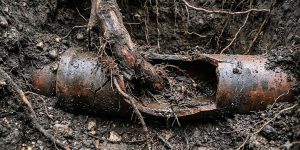
Tree roots don’t punch through solid, healthy pipe. They exploit existing weaknesses.
Small cracks, loose joints, and shifted pipe sections release moisture and nutrients into the surrounding soil. Roots naturally grow toward that moisture source, and once a root finds a gap, it thickens over time and widens the opening it entered through.
This matters because it explains why the same drain often gets root problems repeatedly. The crack or joint stays weak even after the roots inside are cleared, unless you address that entry point directly.
Common Entry Points In Aging Pipes
Root intrusion tends to concentrate around a few predictable weak spots rather than occurring randomly along a pipe run.
- Joints and seams, where two pipe sections connect
- Hairline cracks caused by ground movement or age
- Areas where a pipe has settled unevenly in the soil
- Older clay or cast iron sections, which are more prone to small fractures than modern PVC
Which Trees Pose The Greatest Risk
Not all trees pose the same risk to underground pipes. Species with aggressive, moisture-seeking root systems, including willows, poplars, and many large ornamental shade trees, are more likely to cause problems than trees with shallower or less invasive root structures.
Proximity matters as much as species. A tree planted close to a pipe run is a concern regardless of type, while even an aggressive rooter positioned well away from your drains poses far less risk.
Can Tree Roots Be Removed Without Digging Up a Drain

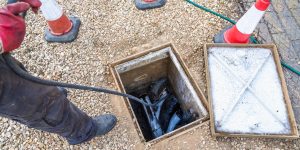
Yes, in most cases. Professional root removal today relies on tools and techniques that work from inside the pipe, reaching the blockage through an existing access point rather than an excavated trench.
Roots can begin regrowing into a treated pipe within one to two years if the crack or joint they entered through isn’t sealed, which is why removal and long-term prevention work best as a combined approach rather than a one-time fix.
Digging is really only necessary when the pipe itself has failed structurally, not simply because roots are present. Keep that distinction in mind as you review your options below.
The 3 Methods We Use to Remove Roots From Drain Pipes Without Excavation
Not every root problem calls for the same tool. The right method depends on how established the roots are and the condition of the pipe around them.
#1) Mechanical Root Cutting
A flexible cable with a rotating cutting head is fed through the pipe to slice through roots and clear the blockage. It works well for active blockages where roots have grown into the pipe interior but haven’t caused major structural damage.
#2) Hydro Jetting
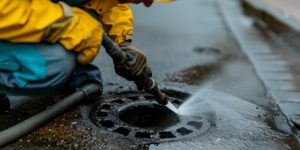
High-pressure water is directed through the pipe to blast apart root masses and flush the debris out completely. It’s particularly effective for restoring the full diameter of a pipe that’s been narrowed by a buildup of smaller roots over time.
#3) Pipe Relining
A new liner is installed inside the existing pipe, sealing cracks and joints from the inside without removing the old pipe. This is the closest thing to a permanent fix, since it removes the entry points roots rely on in the first place.
Comparing Your Options At A Glance
Here’s how the three compare side by side:
- Mechanical cutting clears active root growth quickly, no digging required, best for moderate blockages
- Hydro jetting clears both roots and residue, no digging required, best for narrowed or heavily coated pipes
- Pipe relining seals the pipe permanently, no digging required, best as a long-term follow-up after cutting or jetting
Think of cutting and jetting as clearing the immediate obstruction, while relining supports long-term pipe asset management by sealing the doorway so roots cannot re-enter.
When Digging Up the Drain Is Still Necessary
We’d rather tell you this upfront than let you find out partway through a job. No-dig methods can’t rebuild a pipe that has physically collapsed or shifted out of alignment.
If a section of pipe has broken apart rather than just cracked, water can no longer flow through it in a way that any internal method can fix. In that specific situation, excavating and replacing that section is the only reliable option.
This is a small minority of cases, but it’s real. Anyone who tells you every root problem can be solved without ever digging isn’t giving you the full picture.
Signs Your Pipe May Need Full Replacement
A few indicators tend to point toward structural failure rather than a straightforward root blockage:
- Repeated blockages at the same point despite previous clearing
- Sections of pipe that appear crushed, misaligned, or missing entirely on camera
- Sinkholes or noticeably sunken ground above the pipe run
- Sewage odor or wet patches that persist even after a drain has been cleared
If any of these apply to your situation, it’s worth raising them directly during your inspection so the recommendation accounts for them.
How We Decide Which Method Is Right for Your Drain
You can’t choose the right method without first seeing what’s actually happening inside the pipe, which is why a camera inspection comes before any tool touches your drain.
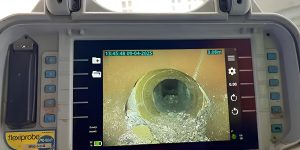
A CCTV drain survey feeds a small camera through the pipe, giving a direct view of where roots have entered, how far they’ve spread, and whether the surrounding pipe is intact or damaged. This single step is what separates a guess from an informed recommendation.
Here’s a quick scenario. A homeowner calls about a kitchen sink that drains slowly and a laundry sink that occasionally backs up. A camera inspection shows root growth concentrated at a single pipe joint, with the surrounding pipe otherwise intact.
Because the damage is localized and the pipe itself hasn’t failed, the roots are cleared with mechanical cutting, then the joint is relined to seal the crack the roots used as an entry point. No excavation is needed, and the fix addresses both the immediate blockage and the underlying cause.
How to Stop Tree Roots From Coming Back
Clearing roots without a prevention plan is a bit like weeding a garden bed without pulling the roots. The visible problem disappears, but the underlying cause remains.
A few habits make a measurable difference over time:
- Schedule a CCTV check every year or two if you have mature trees near your drain line
- Apply a root growth inhibitor as a preventive measure rather than waiting for symptoms to return
- Consider relining any pipe section with a known crack or joint issue, even if it isn’t currently blocked
- Position new trees well away from underground pipe runs when landscaping
- Watch for early warning signs, including slow drains, gurgling sounds, or a damp patch appearing in your yard
Have you noticed any of these signs already? Catching root intrusion early is almost always less disruptive and less costly than waiting until a full blockage forces the issue.
Root Barriers Explained
A root barrier is a physical panel installed vertically in the soil between a tree and a pipe run that redirects root growth downward and away from the pipe rather than blocking it entirely.
Barriers work best when installed proactively, before roots have already established a path toward the pipe. Retrofitting around an existing root system is possible but generally less effective than installing one when you plant a tree.
A Simple Maintenance Schedule
For property owners who want a concrete routine rather than a general reminder to “keep an eye on it,” a simple cadence looks like this:
- Every 6 months, watch for slow drains or gurgling as an early symptom check
- Every 1 to 2 years, schedule a CCTV inspection if mature trees are nearby
- Every 2 to 3 years, reapply a root growth inhibitor as a preventive treatment
What Does It Cost to Remove Tree Roots From a Drain

Cost depends on the method used, how far the roots have spread, and whether any pipe repair is needed alongside the removal itself.
Professional root removal typically falls somewhere between $250 and $1,100, with simpler cutting or jetting jobs at the lower end and relining or repair work pushing costs higher.
An inspection is really the only way to know where your situation lands, since two drains with similar symptoms can have very different root causes underneath.
Factors That Influence Your Final Price
A handful of variables typically account for most of the difference between a lower-end and higher-end quote:
- How many access points the pipe has, which affects how easily equipment can reach the blockage
- Pipe depth and material, since older or deeper pipes can take longer to treat
- Whether relining or repair is needed in addition to root removal
- How far the roots have spread along the pipe run
Remove Tree Roots From Your Drains Without Unnecessary Digging
Tree roots in drains can cause slow drainage, gurgling sounds, recurring blockages, foul smells, and wastewater backups. In many cases, you can clear the problem without excavation using no-dig methods such as mechanical root cutting, high-pressure water jetting, or drain relining.
The right solution depends on how far the roots have spread, where they entered the pipe, and whether the surrounding drainage system is still structurally sound. A CCTV drain survey can show whether the issue can be resolved from inside the pipe or whether excavation is needed for a collapsed or severely damaged section.
Need help finding the best no-dig solution for tree roots in your drain?
Contact Proline Drainage to arrange a professional CCTV drain survey. We provide root removal, drain unblocking, high-pressure water jetting, drain relining, drain repairs, and practical drainage solutions to help restore flow, reduce disruption, and protect your property from recurring root damage.