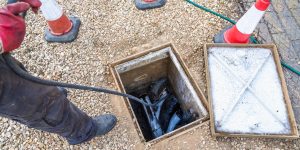
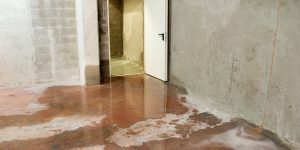
Quick Answer: An outside drain overflowing when it rains usually means water is entering the drainage system faster than it can flow away. Common causes include partial blockages, built-up silt and debris, root intrusion, damaged pipework, a saturated soakaway, or heavy rainfall exceeding the system’s capacity. If water remains pooled long after the rain stops, the drain repeatedly overflows, or you notice foul smells, the problem may require professional drain unblocking or a CCTV drain survey.
An outside drain can overflow during heavy rain when water enters the drainage system faster than it can flow away. This may be caused by a blockage, accumulated silt or debris, damaged pipework, root intrusion, a saturated soakaway, or rainfall that exceeds the system’s drainage capacity.
The way the water behaves before, during, and after rainfall can provide useful clues about the underlying cause. For example, water that clears soon after the rain stops may indicate a temporary capacity issue, while standing water that remains for several hours can point to a blockage or drainage fault.
This guide explains the common reasons an outside drain overflows when it rains, how to tell the difference between a blocked and overwhelmed drain, what you can do immediately, and when a professional drainage inspection may be necessary.
What Causes an Outside Drain to Overflow When It Rains
An overflowing drain almost always comes down to one thing: water arriving faster than the system can carry it away. The cause of that mismatch varies, and each one calls for a different response.
Blocked or silted-up drains are the most common culprit, especially as autumn approaches. Leaves, silt, and general debris settle inside the pipe or gully and narrow the space water has to pass through.
- Leaves and debris washed in from nearby beds or lawns
- Silt and grit that builds up gradually over months
- Roots or moss growing across the gully grate
Heavy rainfall exceeding system capacity happens even in a drain with nothing wrong with it. Standard UK surface water drains are designed following BS EN 752 European standard guidelines for drain and sewer systems to handle a flat rainfall intensity of 50mm/hour (rising to 75mm/hour for higher-risk or commercial properties). As a result, a genuinely intense storm can simply outpace that design limit even when nothing is physically blocked.
Root ingress or pipe damage is a structural cause rather than a simple debris problem. Research on tree root intrusion in sewer systems shows that fine tree roots naturally seek out underground moisture and enter via loose joints or micro-cracks, gradually causing major blockages or even collapsing sections of pipe.
An overwhelmed or saturated soakaway affects properties that drain into the ground rather than a sewer. A soakaway is an underground chamber that lets water disperse slowly into surrounding soil, and during prolonged wet weather the surrounding ground can become fully saturated, leaving it nowhere to send new water.
We have found that most “sudden” overflows are not sudden at all. The drain has usually been narrowing for months, and the first heavy storm of the season is when it becomes exposed.
Is Your Drain Blocked or Just Overwhelmed
This distinction matters more than any other single factor. It determines whether you reach for a drain rod or reach for the phone.
Signs Your Drain Is Overwhelmed
- Water recedes within an hour or so of the rain stopping
- The overflow only happens during genuinely heavy or prolonged downpours
- Neighbouring properties on the same system report the same issue during storms
- There is no unusual smell, just standing rainwater
If this sounds like your situation, the system is likely doing its job under unusually heavy load. That is not a fault; it is a capacity limit, and it tends to ease once the rain does.
Signs Your Drain Is Blocked or Damaged
- Water stays pooled long after the rain has stopped, even overnight
- The problem has started recently with no obvious change in local rainfall
- You notice a smell of sewage rather than just wet ground
- Only your property is affected while neighbouring drains cope fine
Any of these point toward something physically restricting the pipe, rather than the storm simply outpacing the system.
What to Do Right Now If Your Outside Drain Is Overflowing

Standing water outside your home can feel urgent, and in some cases it genuinely is.
Immediate Steps You Can Take
- Clear any visible leaves or debris from the grate by hand, without forcing anything down the pipe.
- Direct water away from doorways or airbricks using sandbags or a temporary barrier
- Avoid pouring extra water, cleaning chemicals, or anything else down the drain while it is already struggling.g
- Keep children and pets away from standing water near a foul-water gully
Think of your drainage system like a motorway during rush hour. One slow-moving car near the entrance backs up traffic for miles, even though every other lane runs fine. A single blockage near your gully can have exactly that effect on an entire run of pipe.
Why the Smell Test Matters
Check whether the smell is sewage rather than just soil and rainwater. A foul odor usually signals this is not simple surface water, and it deserves faster attention than a garden drain running slow.
If you catch that smell alongside standing water, treat it as a stronger signal to escalate than pooling alone, even if the water itself looks fairly clear.
How to Stop Your Outside Drain From Overflowing for Good
A one-off clear helps in the moment, but you want a fix that lasts through the next storm too.
Build a Realistic Maintenance Rhythm
Clearing gullies and grates twice a year, ideally before autumn leaf-fall and again before winter storms, prevents the slow buildup that causes most blockages.
Check your guttering and downpipes at the same time. A large share of “drain” overflows start with water pouring off a blocked gutter straight into a drain never designed to handle that extra volume on top of ground-level runoff.
Consider a CCTV Drain Survey for Recurring Issues
If the problem keeps returning despite regular clearing, a CCTV drain survey is worth considering. An engineer feeds a small camera through the pipe to identify cracks, root ingress, or collapsed sections that no amount of rodding will fix.
It costs more than a simple clear, but it tells you what you are dealing with before you pay to fix the wrong thing repeatedly.
Check How Much of Your Garden Is Paved
Have you paved over part of your garden or driveway recently? That increases the water reaching your drains during heavy rain, since paved surfaces cannot absorb water the way soil and planting do.
Sustainable drainage guidance recommends managing at least the first 5mm of any rainfall event on site through permeable paving, planting, or a soakaway, rather than sending it straight into the drain.
When Should You Call a Professional

Not every overflowing drain needs a callout. If clearing visible debris solves it and the system copes fine next storm, you have likely resolved a straightforward blockage yourself.
Signs It Is Time to Bring in Help
- The overflow keeps recurring even after you clear the grate each time
- You notice a persistent sewage smell rather than just wet ground
- You suspect root ingress, pipe damage, or a collapsed section
- Water is starting to pool close enough to affect a doorway, airbrick, or foundation
Any one of these is worth acting on. Together, they clearly signal that rodding or a hose will not solve the underlying issue.
If You Are a Landlord or Property Manager
Responsibility for shared or boundary drains varies by local authority, and it catches out a surprising number of property managers who assume the cost automatically sits with them.
Before booking any work, check whether the drain is private to the property, shared with a neighbor, or adopted by the local water authority. It can change who is responsible for the fix.
Stop Outside Drain Overflows Before the Next Heavy Rainfall
An outside drain that overflows during rain can point to more than surface water. Leaves, silt, root ingress, pipe damage, saturated soakaways, or drainage capacity issues can all prevent water from flowing away properly. They may increase the risk of flooding, foul smells, and damage around doors, patios, airbricks, or foundations.
If the problem keeps returning after you clear visible debris, a professional inspection can help determine whether it’s a simple blockage or a deeper drainage fault. A CCTV drain survey can reveal cracked pipework, root intrusion, collapsed sections, or hidden restrictions before the next storm worsens the problem.
Need help finding out why your outside drain keeps overflowing?
Contact Proline Drainage to arrange a professional drainage inspection. We provide outside drain unblocking, CCTV drain surveys, high-pressure water jetting, blocked gully clearance, root removal, drain repairs, and practical drainage solutions to help restore proper flow and protect your property from recurring rainwater overflows.